
Fossicking
'Spekking'.

Fossicking
‘Spekking’.
I love fossicking for interesting rocks. Colours and patterns are what I look for. I cut and polish at the Lapidary Club of Tasmania just to reveal earth’s bounty within. I don’t make jewellery. It is not the monetary value that interests me. I’m looking for the rock that ‘speaks’ to me. Many in the club would refer to those as ‘leaverites’ – leave it right there.
When out at Ruby Gap, east of Alice Springs, I became re-enthused as I picked up splinters of crushed garnets in the dry riverbed. The pink sand was a sure indicator.
To go onto Gemtree, just north-west of Alice was ‘a no-brainer’ I signed on for two tours to look for zircons and garnets. You are taken out to a public or private field, and given the equipment and information, and water, to dig, sieve and wash the muddy finds
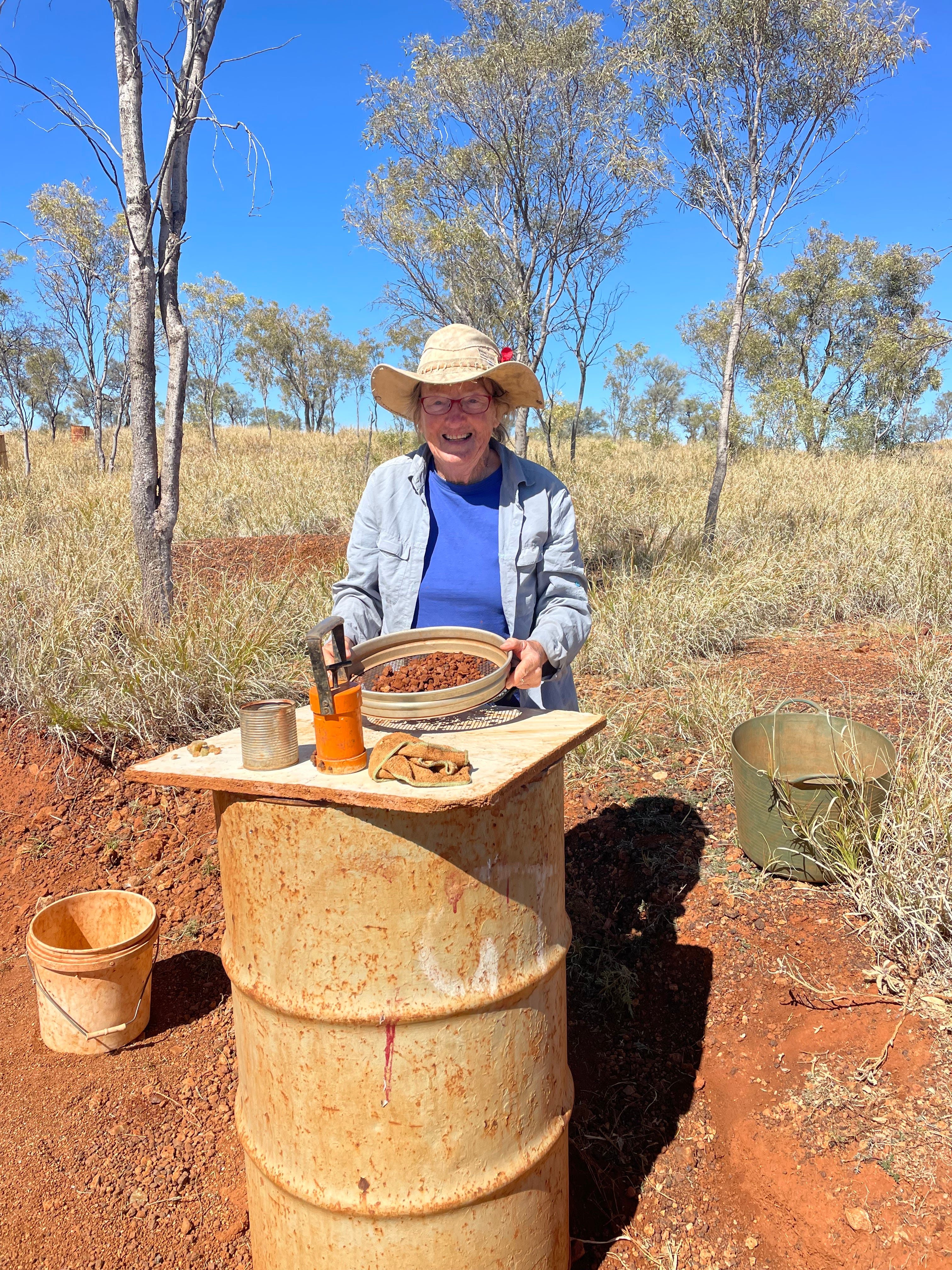
.But, have I reached ‘the level of my incompetence’? I can hardly dig in the hard, rocky dirt, and am exhausted in the hot sun within minutes. My strength has diminished at 77 years of age. Of course, I am at a disadvantage being solo, as all the other participants were couples, with a strong digging male and a sharp-eyed spotter. I don’t think eye-sight is the problem though. When I had my cataracts done, I had one close-up lens for fossicking, and one distance lens for bird-spotting. It is the sheer strength that it needed to dig and sieve for hours that I now lack. I was demoralised as I watched the couples process buckets of dirt, while I struggled with just a bucket or two. I did find a couple of examples but not lots as others did. All I could think was ‘Is this another thing I have to give up?’ Then it also occurred to me that even though I carry a metal detector I can no longer dig, bend, check the earth, and re-dig multiple times to locate the target. It is just too hard. The detector will have to go.
Something that has given me so much joy over a number of years, and I have a huge rock collection to show for it, is no longer possible. I am devastated. It is not just the acquisition, it is the search, the quest when on a road trip. Is it over?
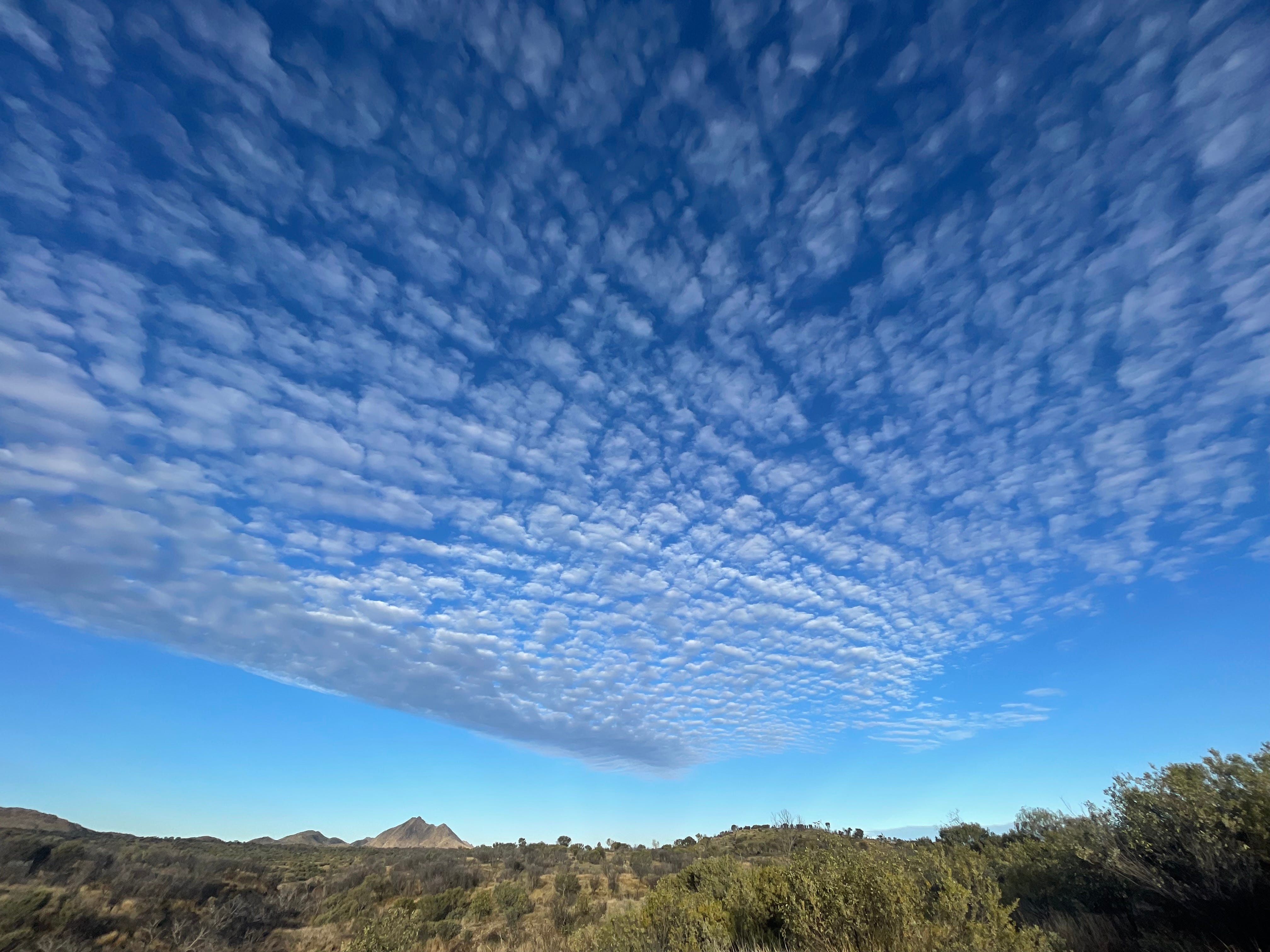
But no, my spotter eyes are good, I can just ‘spekk’, and spekking (probably comes from ‘spectacles’) is fossicking talk or slang for no digging, just walking along finding what is on the surface. And big. Big is better. Phew! My mood rises.
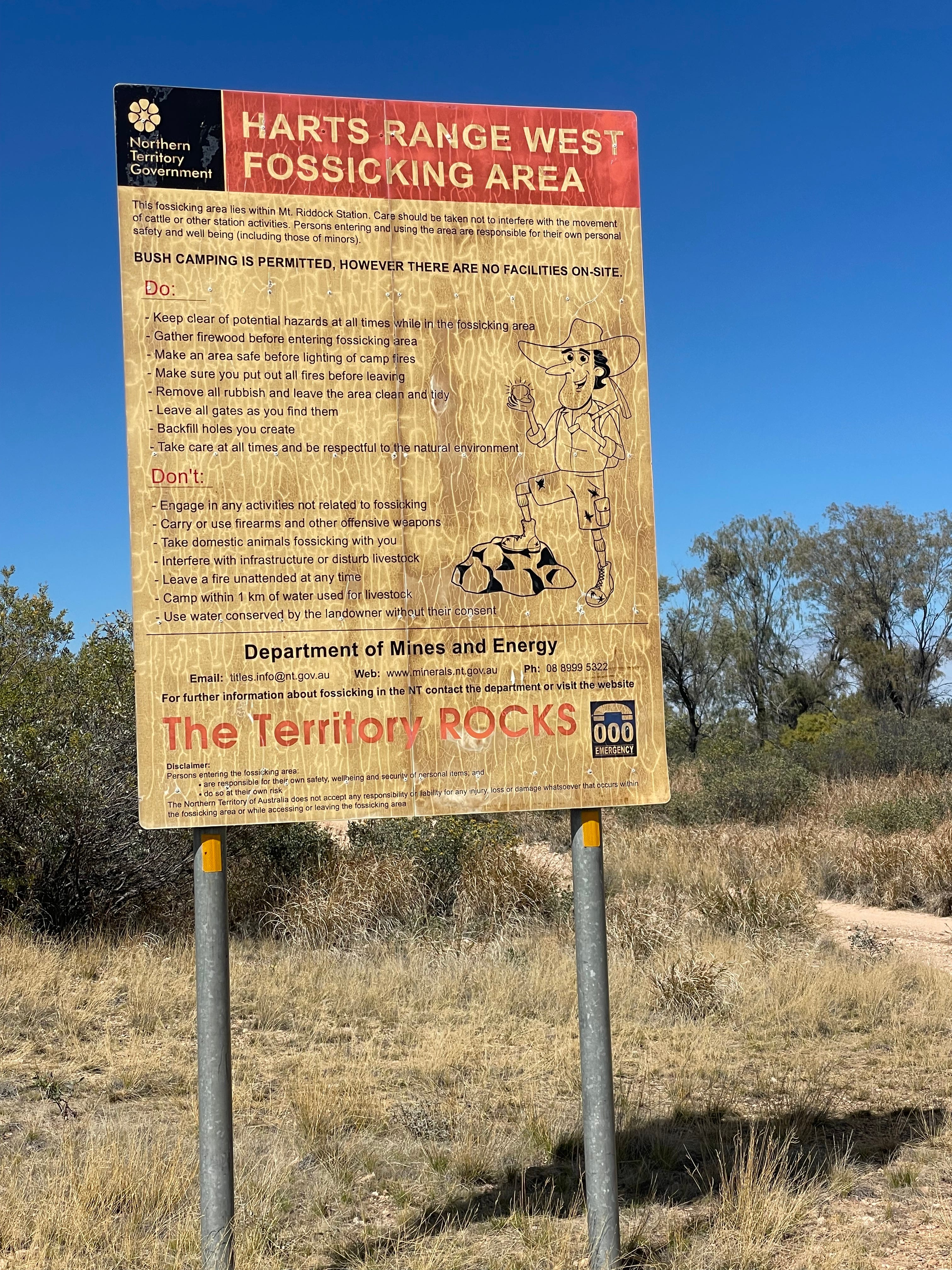
I go out to designated fossicking spots in the Harts Range. It is feasible to find garnets, zircons, vermiculite, apatite, tourmaline, quartz, mica by just spekking. The most interesting rocks and gem-stones are often found along road-sides when a grader has been through, or even in a car park when someone’s special find has fallen from a pocket or not been recognised for what it is.
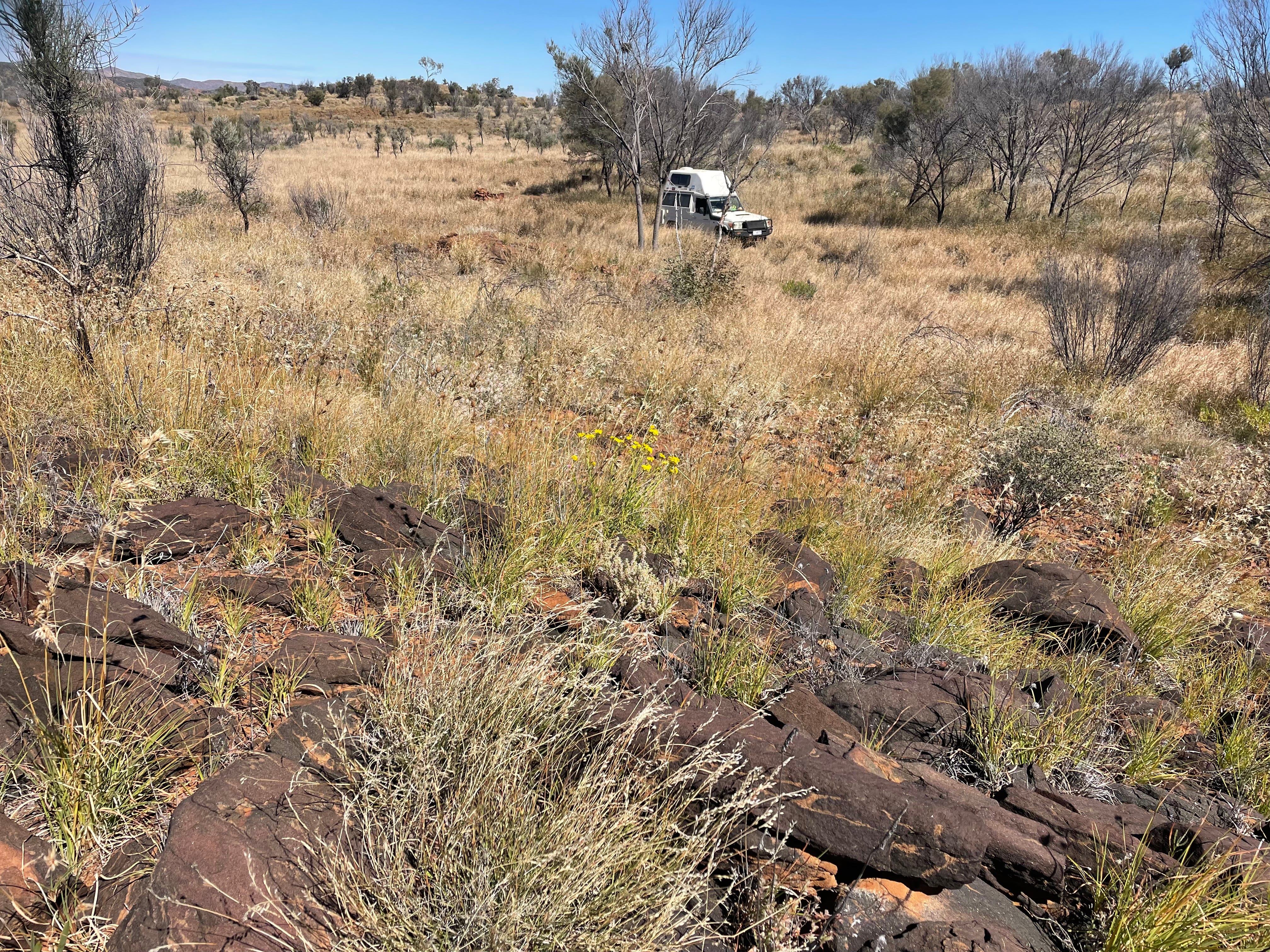
I have the old fossicking maps, but tracks have changed and locations don’t match. Much of the Harts Range has been closed off to fossickers because basically they are a nuisance when cattle raising is the aim. Mt Riddock Station is 2,633 square kilometres so I guess they can still cope with a couple of small government designated fossicking areas. I find a brilliant camp-site overlooking the ranges, but explore the tracks before I set up. The buffel grass has taken over from the red dirt. It is virtually impossible to see any old mine workings or fossicking diggings.
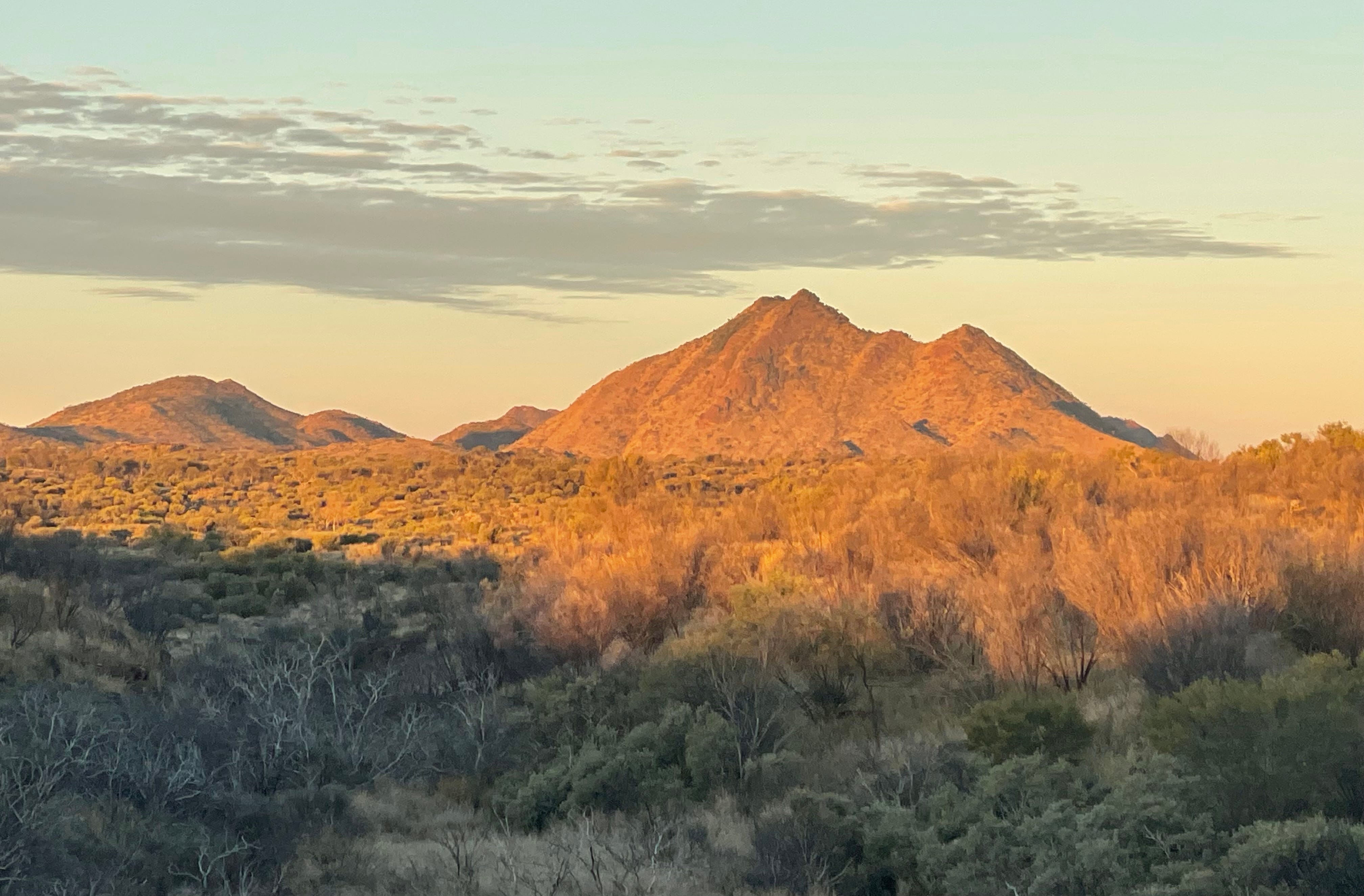
I was feeling disillusioned again, when on a slow rocky jump-up I spot the red sand sign of garnets where the water has run down. I spekked a few samples from the creek. Then I came to a track end, also with the distinctive red sand. I spekked and specked until my back could take no more, and my fingernails were worn down. Now that was a substantial haul. Most will go into the tumbler to smooth and polish, but I might find a couple of cutters when I have enough water to wash them off. I even found some granite specimens with garnet in situ. I’m back in the game!
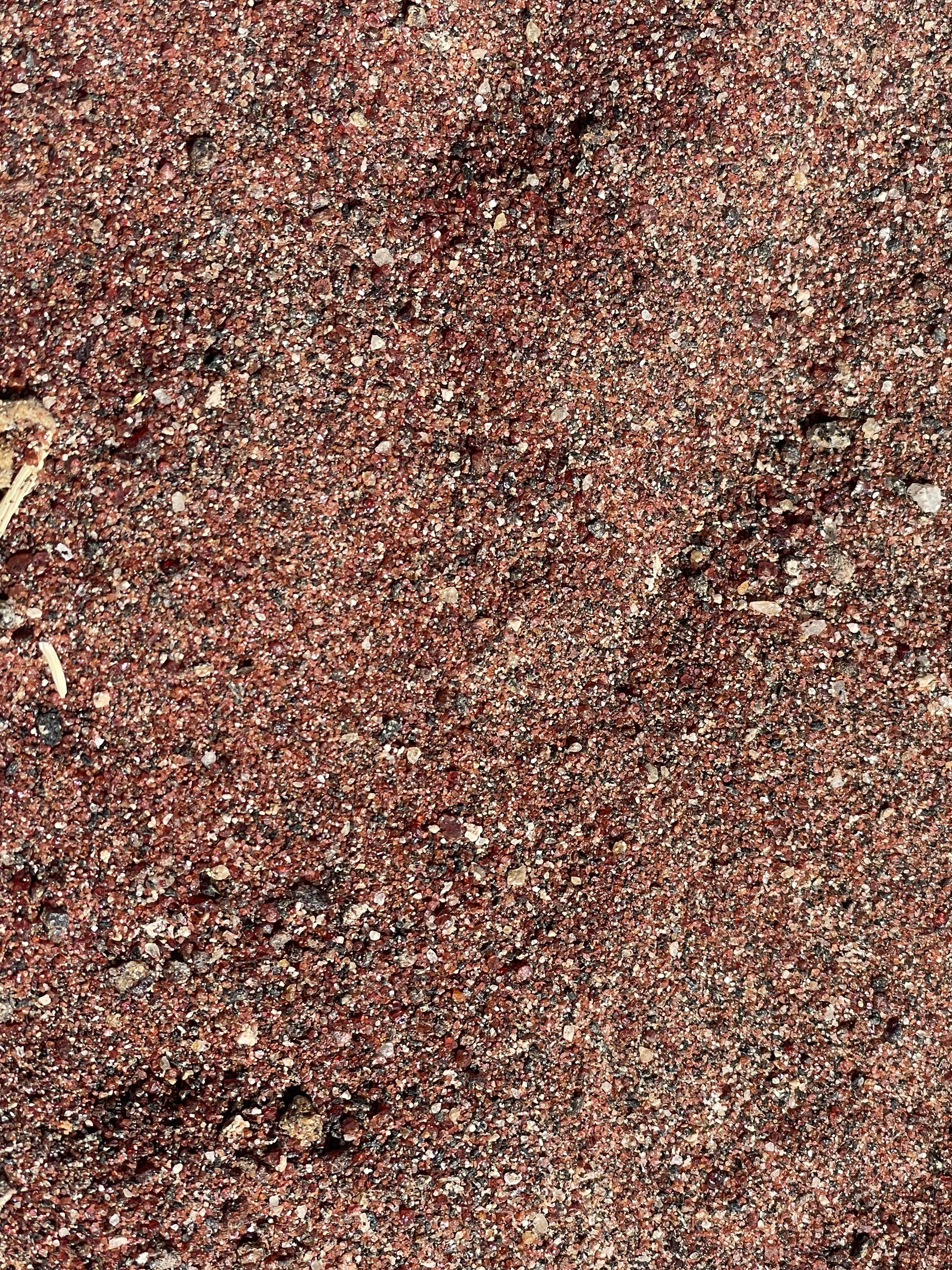
I set off on the Plenty Highway heading east to Boulia and Queensland. There are plenty of corrugations, mud and sharp rocks, and a bit of bitumen, but this will gradually be sealed to be the Outback way across Australia from Cairns on the east coast to Laverton in Western Australia. A fun fact from a notice along the road. ‘One kilometre of bitumen on this road takes 250 hours of man power, 1700 cubic metres of gravel and in 2016 cost about $250,000.’ It is slow progress.
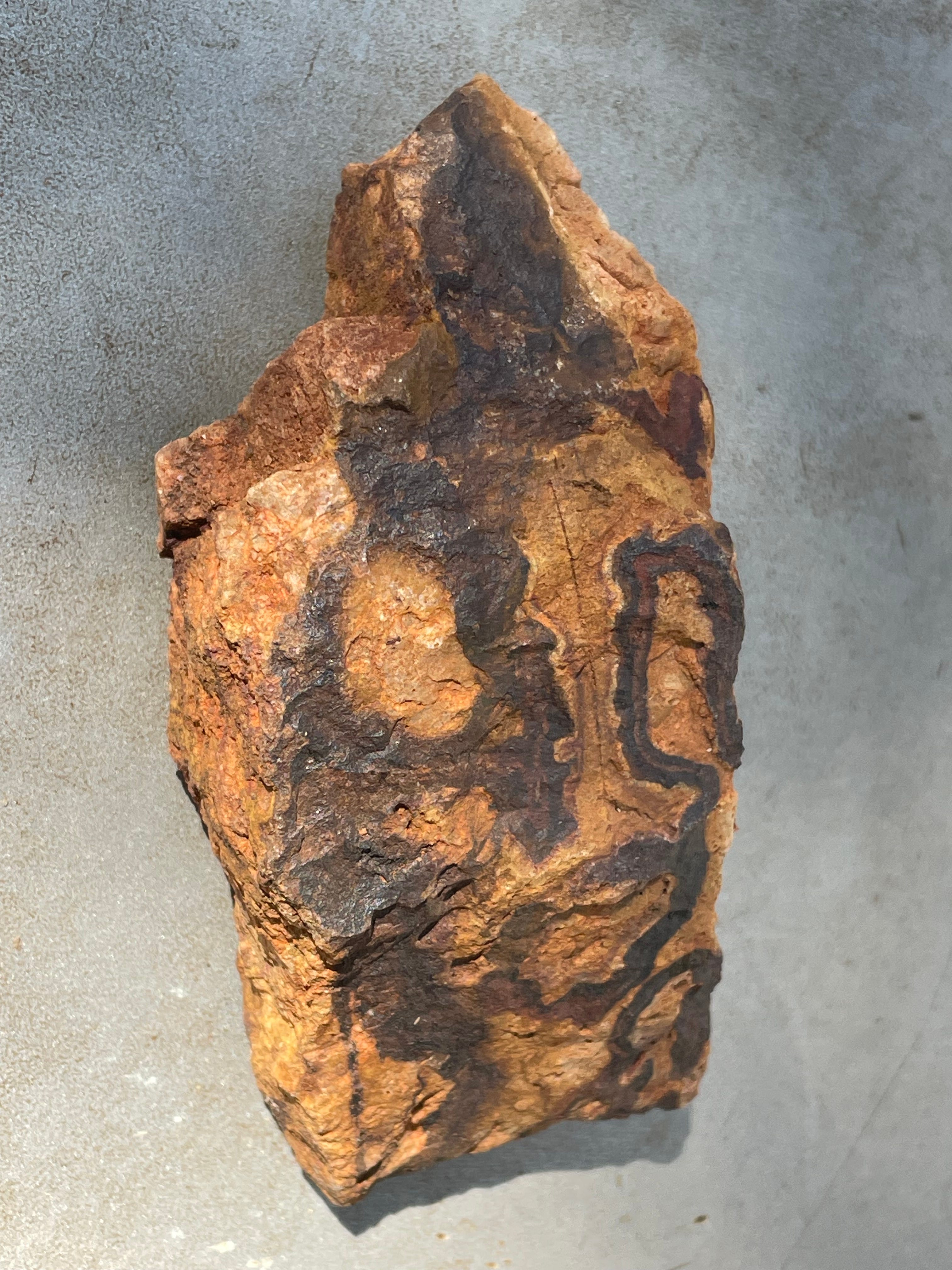
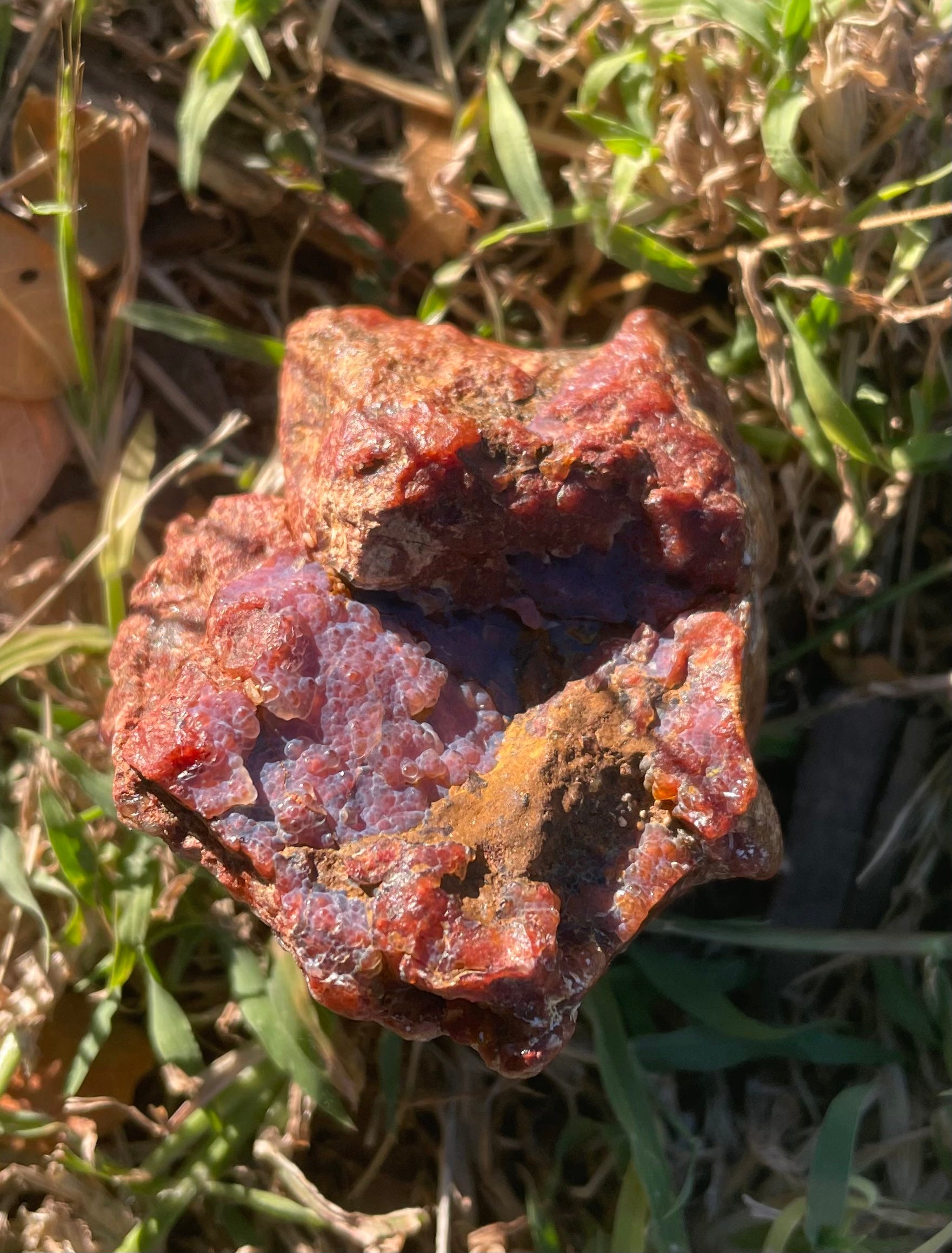
I camp the night at Marshall River, a mighty river when in flood that I’ve never heard of before, but now a dry sandy surface with patches of small rocks. Dry river beds are a great source of specimens as they’ve been washed down, and tumbled from floods each year. I spekk a few smalls finds for the tumbler – agates, quartz, chert, and a gorgeous unknown bright purple specimen. The feeling of joy. This is what the quest is all about.
Camped right on the river bank, my reverie is disturbed late afternoon by a young ‘squire’ from the station on his trail bike who informs me “You can’t camp here. No camping right by the river.” I have a nice chat about his schooling, birds and rocks of the area, and the station “We have more than 1000 kilometres.” I tried to instigate a philosophical chat about the difference between camping and sleeping in a vehicle, but he was too young, about ten years old, to engage. With his age, I thought I’d charmed him, but as he went to ride off, with all his entitlement, his last words were : “You can’t camp here. You’ll have to move.” I moved up to the public spot by the road.
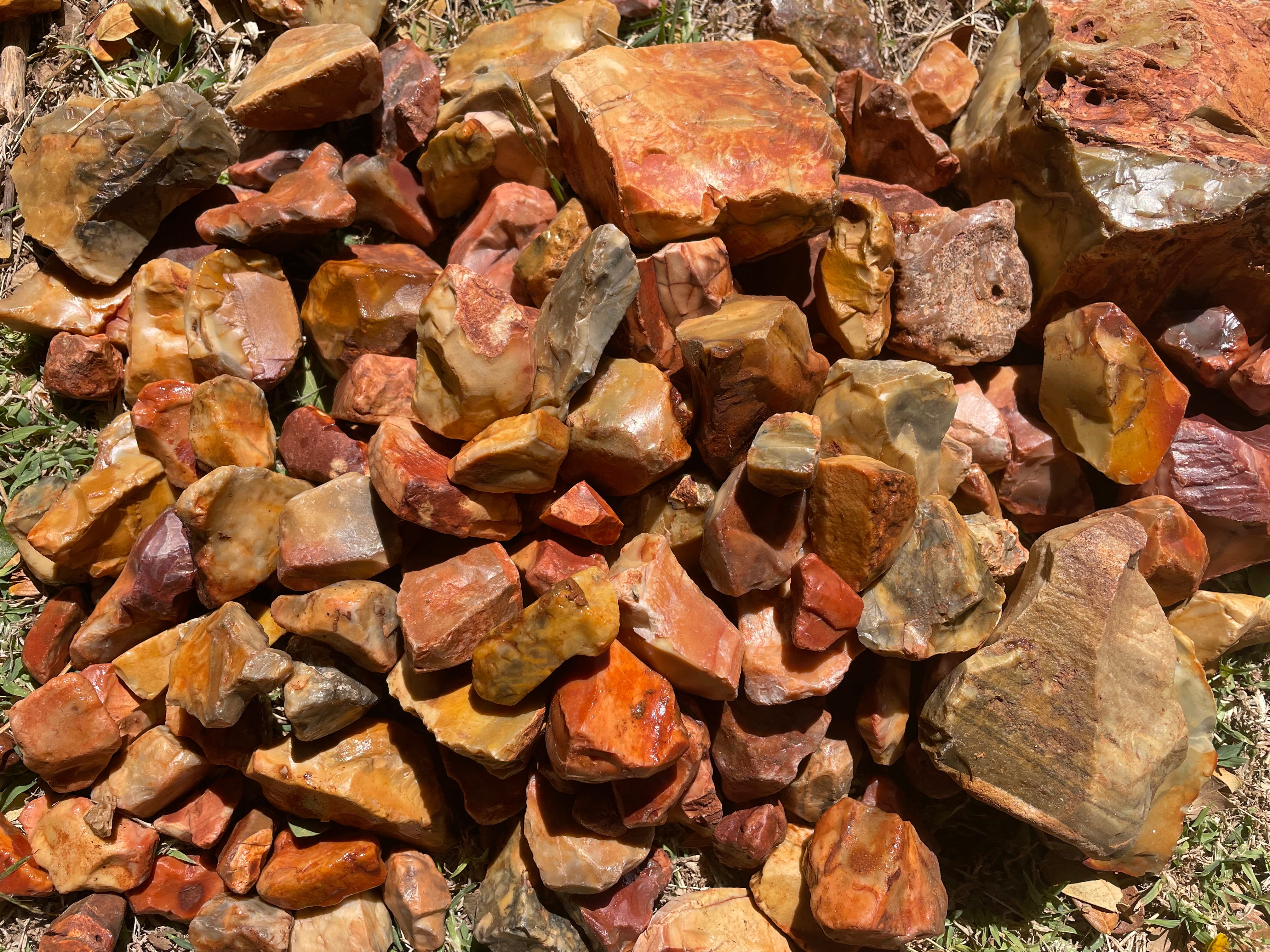
Further down the road I found an unlikely, unnamed creek full of small pieces of brightly coloured, partly polished chert, coloured I think by aeons of water, wind and sand. Perfect for the tumbler. Hard to choose, hard to stop. I’ve called the creek Chert Creek as it deserves a name.
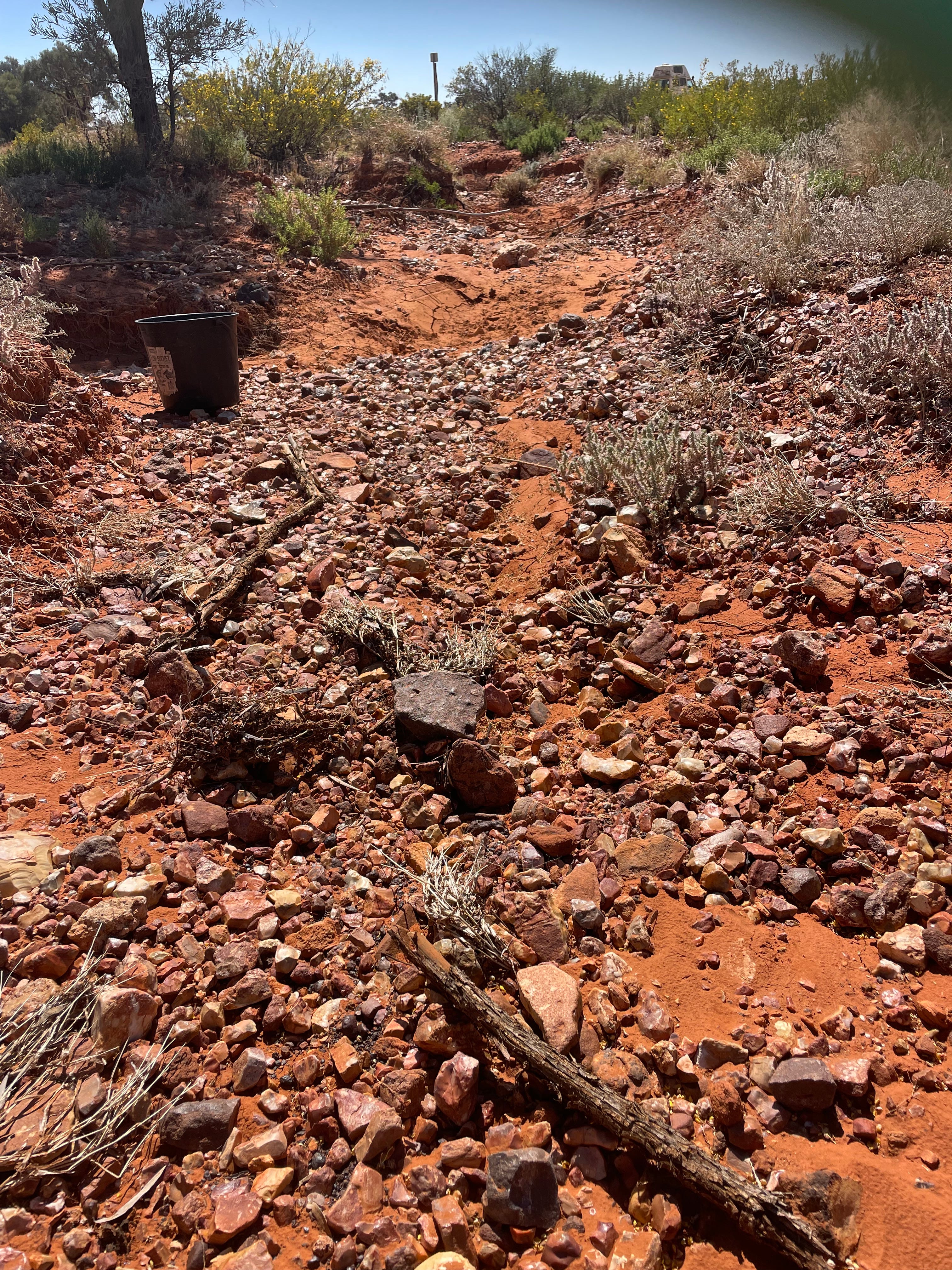
And then further along where the grader had been along the edges, pure white chert, so incongruous in the harsh landscape, disfigured or decorated depending on perspective, with baked iron from the soil. Found in limestone, this is being crushed to gravel in preparation for sealing the road sometime.
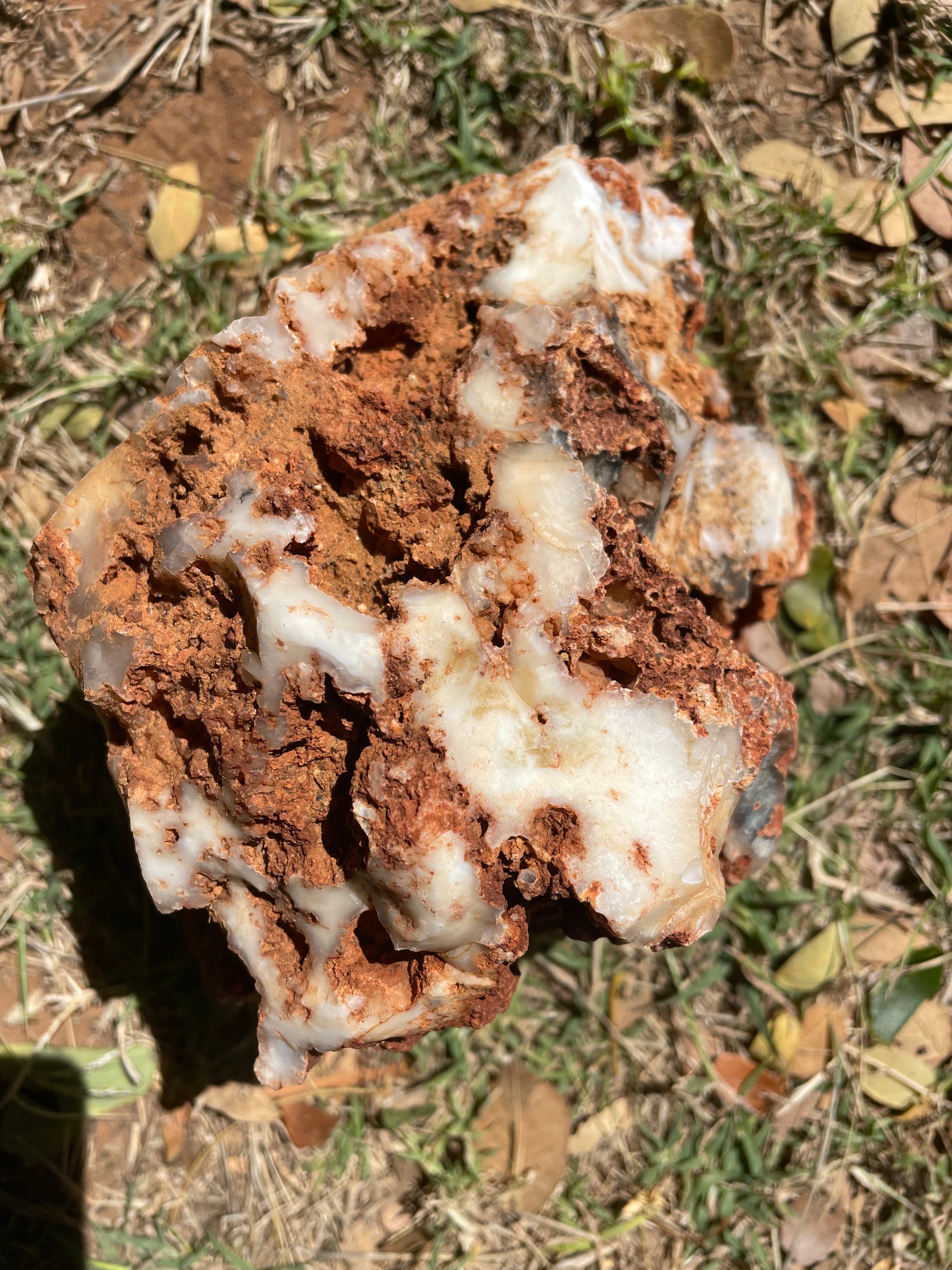
I love spekking. So satisfying! The question now is: Does spekking require a fossicking licence as no basic hand tools are required? Will this be put to the test now I have arrived in Queensland?
Hi there Louisa,
I do very much like the story of your being out there spekking amongst all those interesting rocks en route to Queensland from the Northern Territory. Thank you.
And I like the way you gave us descriptive photographs to help better appreciate your pleasure in the process of spekking. Good on you for being able to change your ways of approaching your life as you become older. I'm doing lots of that also and it is leading me to learning about and doing things I've never done before. May you keep on keeping on simply being.....Noni x
I love this story. I love that you shared the joy you felt when you realised there are so many more things you can do, new things too, despite getting older. You are now a speccologist extraordinaire!!