
Back to Borneo
Change!

Back to Borneo
Change!
The plane appears to hover over the dark jungle below, the jungle criss-crossed with sluggish brown rivers curling and wandering over the dark earth.
Thirty years since I first felt the wonder of ‘coming to the heart of Borneo’. Thirty years since I was heading on a red-eye flight out of Jakarta to a teaching post in a small school, Tanjung Bara International School, deep in the jungle, yet by the sea, in Kalimantan, Indonesia Borneo. Thirty years since I stepped out of the CASA into the fierce sunlight, the 33-degree heat, and the sweltering humidity of the equator, the tropics, that I was to experience and enjoy for the next three years. Borneo, the land know for isolation, jungle, early exploration, Dayaks, head-hunting and hornbills.
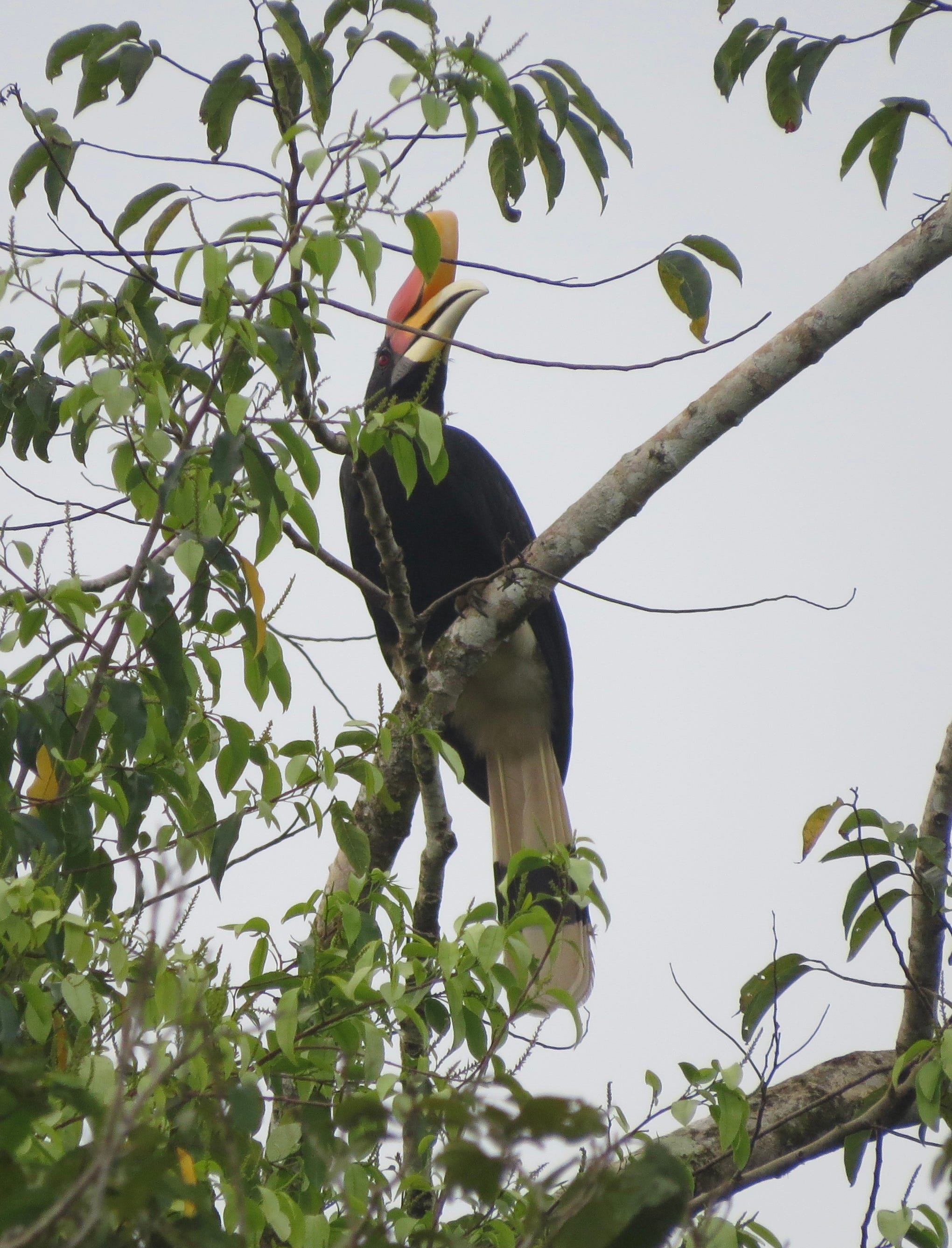
And now I’m returning to the island of Borneo, not to Indonesian Kalimantan but to Malaysian Sabah in the North. You can never go back! I rarely return as a tourist or adventurer to somewhere I’ve lived. It’s living in a place that gives the heart connection that can never be attained through a quick holiday or visit. I’m going on a guided two-week adventure – same island, Borneo, different country.
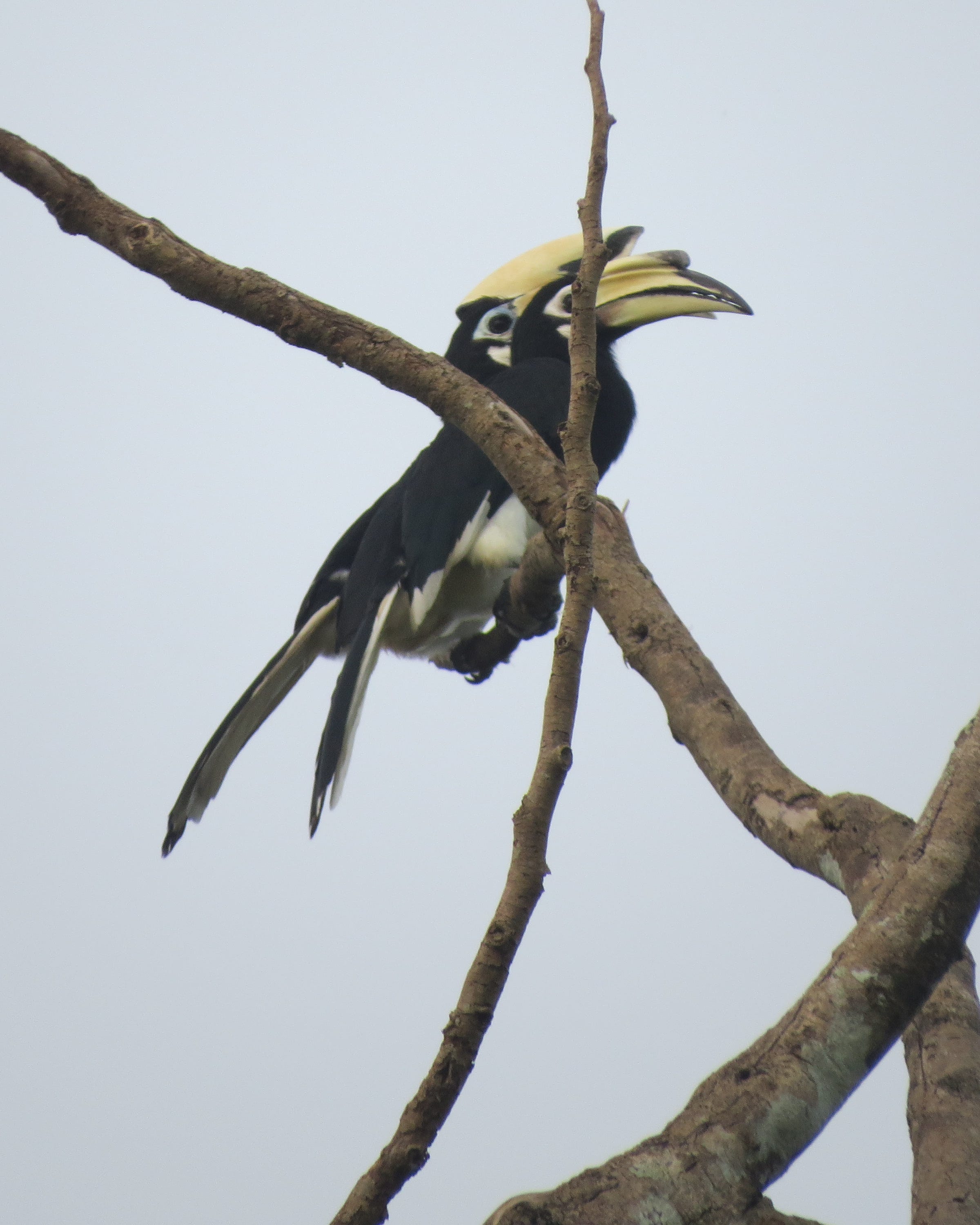
I’m flying into Sandakan towards the north-east tip of Borneo, a much smaller area, colonised by the Portuguese and British before Malaysia gained its independence in 1957. Will I find similarities between the topography of the two areas, the jungle, the villages of the Dayaks and Malay? Will there still be wild orangutans, hornbills and alligators? Will my Bahasa Indonesian, with so many similarities to Bahasa Malaysian, come flooding back? Will it feel like home as I explore Sabah over the next two weeks?
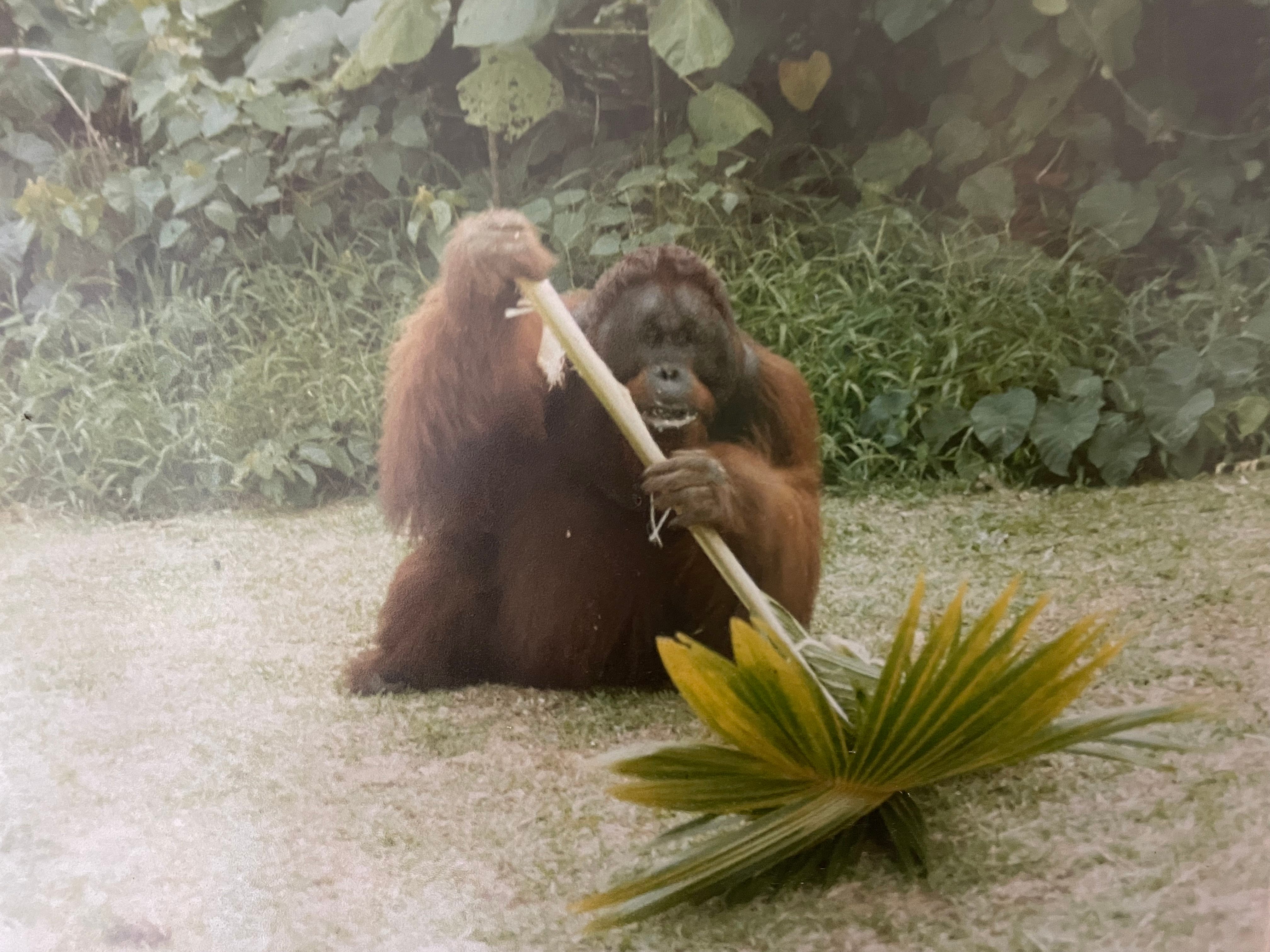
I lived in Tanjung Bara, an expat town built for a Rio coal mine just north of Sangatta. It was mainly Australians, but also other international expats and Indonesians of the management class - a closeted bubble. The only access was by air or boat. We were visited often by wandering orangutans from the nearby Kutai National Park looking for palm hearts in the gardens of the town.
I was one of two women living in the single men’s quarters in conjoined rooms. I ate at the mess. I swam in the resort style pool. In fact, that became more of a home than my sad room. I drank Anchor or Bintang beer at the bar beside the pool, and socialised. I exercised by walking the golf course, down the boardwalk to the mangroves, and spotted for ‘salties’. I played touch rugby, tennis and sometimes was given a bat at the men’s cricket. I joined H.H.H. (Hash House Harriers), an expat innovation, where we ran through the jungle following a paper trail, followed after by a drinking circle. It was very hot. When I had ‘leave’, it was company policy to leave site to prevent ‘jungle fever’.
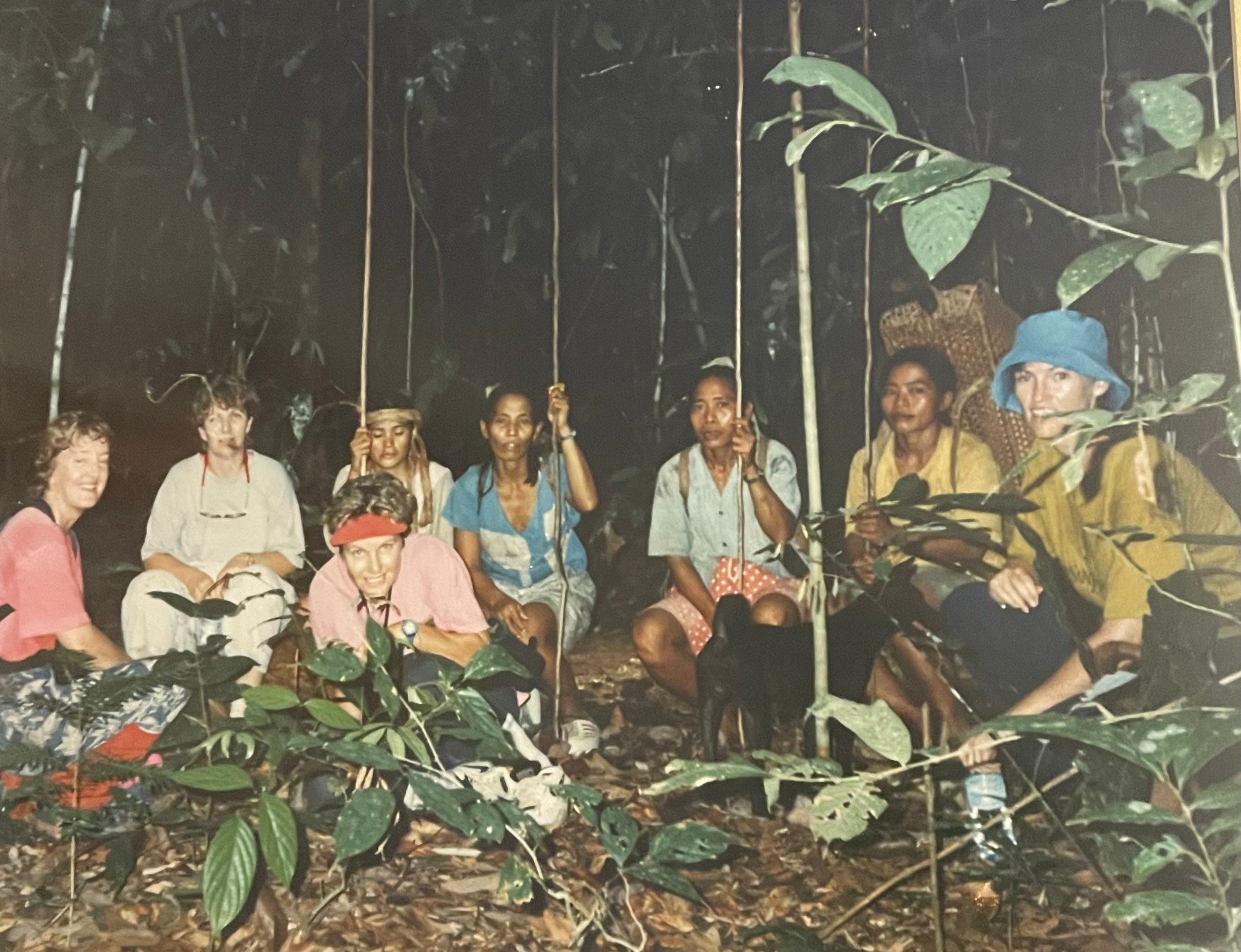
If I ever had access to a car, or a friend with a car, I’d head to the nearest town, Sangatta, for local shopping at the markets, or take a ketinting (a local, narrow, wooden river boat) further down the river, and on evenings go to the bars and restaurants on the edge of town. Lack of roads prevented further exploration. On leave I ventured further afield, exploring the other islands of Indonesia. I did a couple of up-river, Mahakam and Kelai river trips, in Kalimantan itself with other women from the site. On these trips I truly felt I was getting into the ‘real’ Borneo, visiting long houses, walking in the jungle with Punan women, who hadn’t seen white women before, camping on the banks of the river under a tarp, speaking (often in sign language) to locals. I look back on the adventure of those trips with sheer joy.
Will this Sabah trip now be too touristy? Sure, we visit towns like Sandakan, Kandasang and Kota Kinabalu, large thriving towns set up originally by the British, but with still the local flavour, always found in the vegetable and wet markets. I chose the trip because there were three days, early morning and evening , spotting for wild-life down the Kinabatangen River. I wasn’t disappointed.
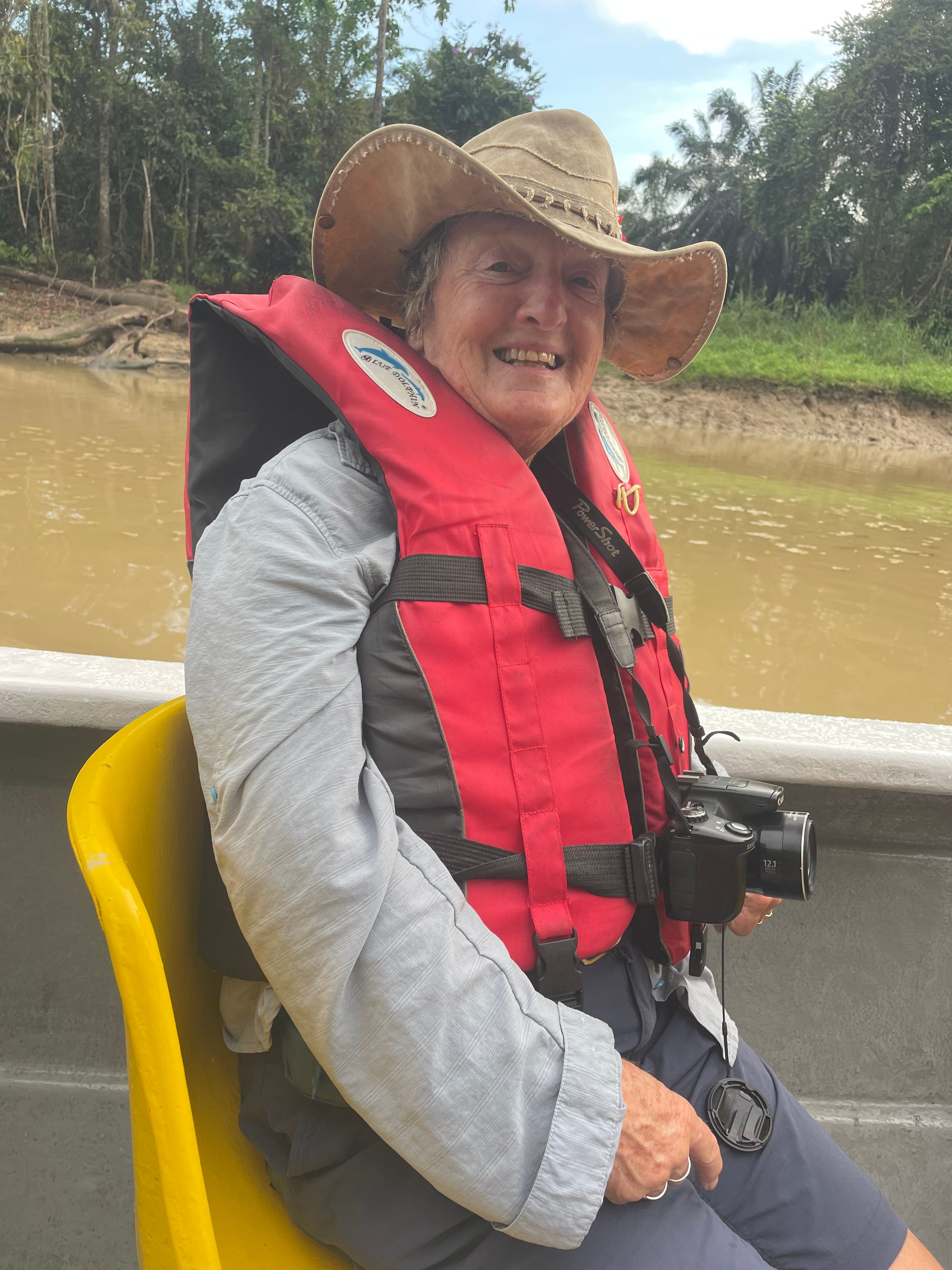
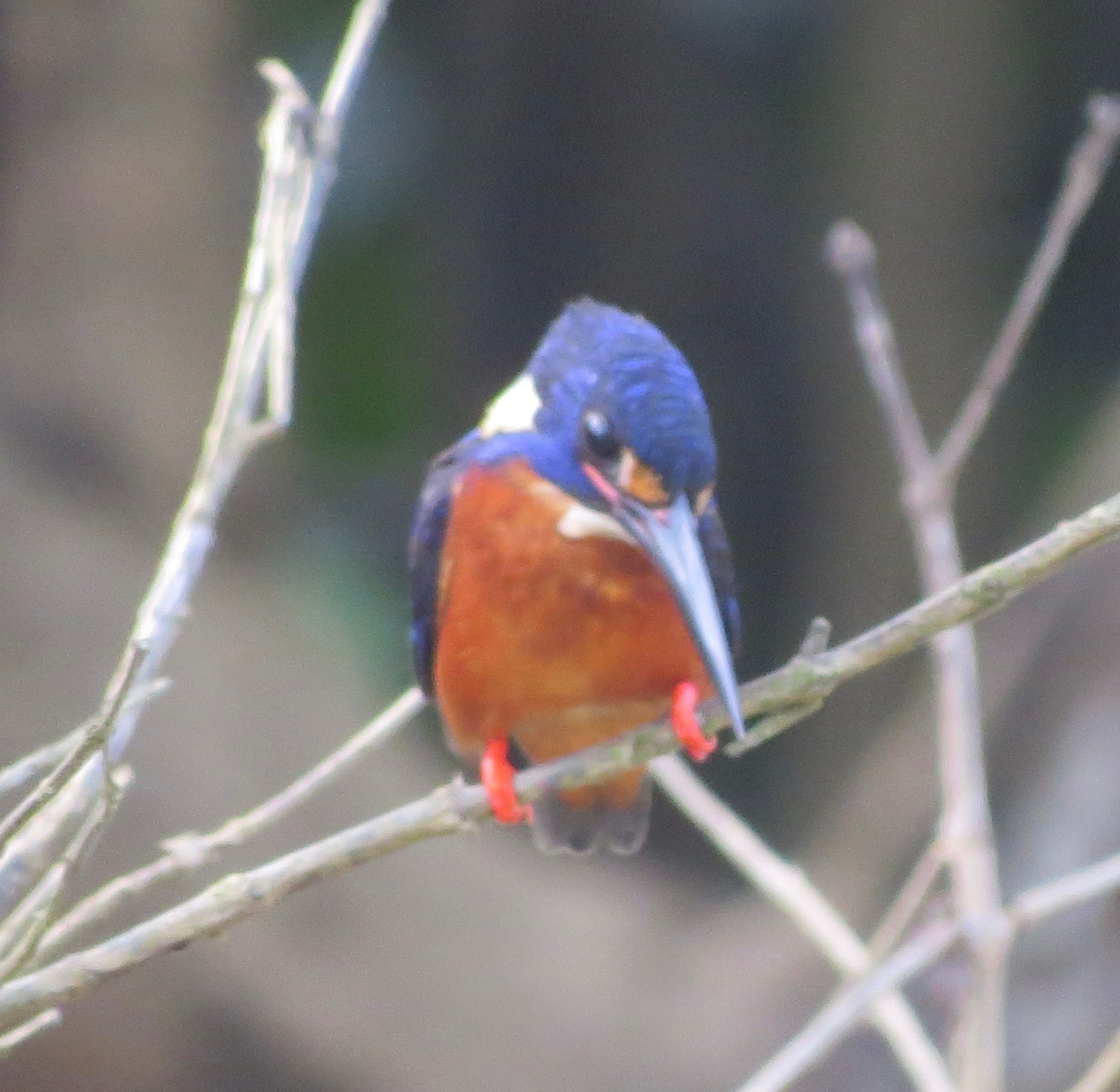
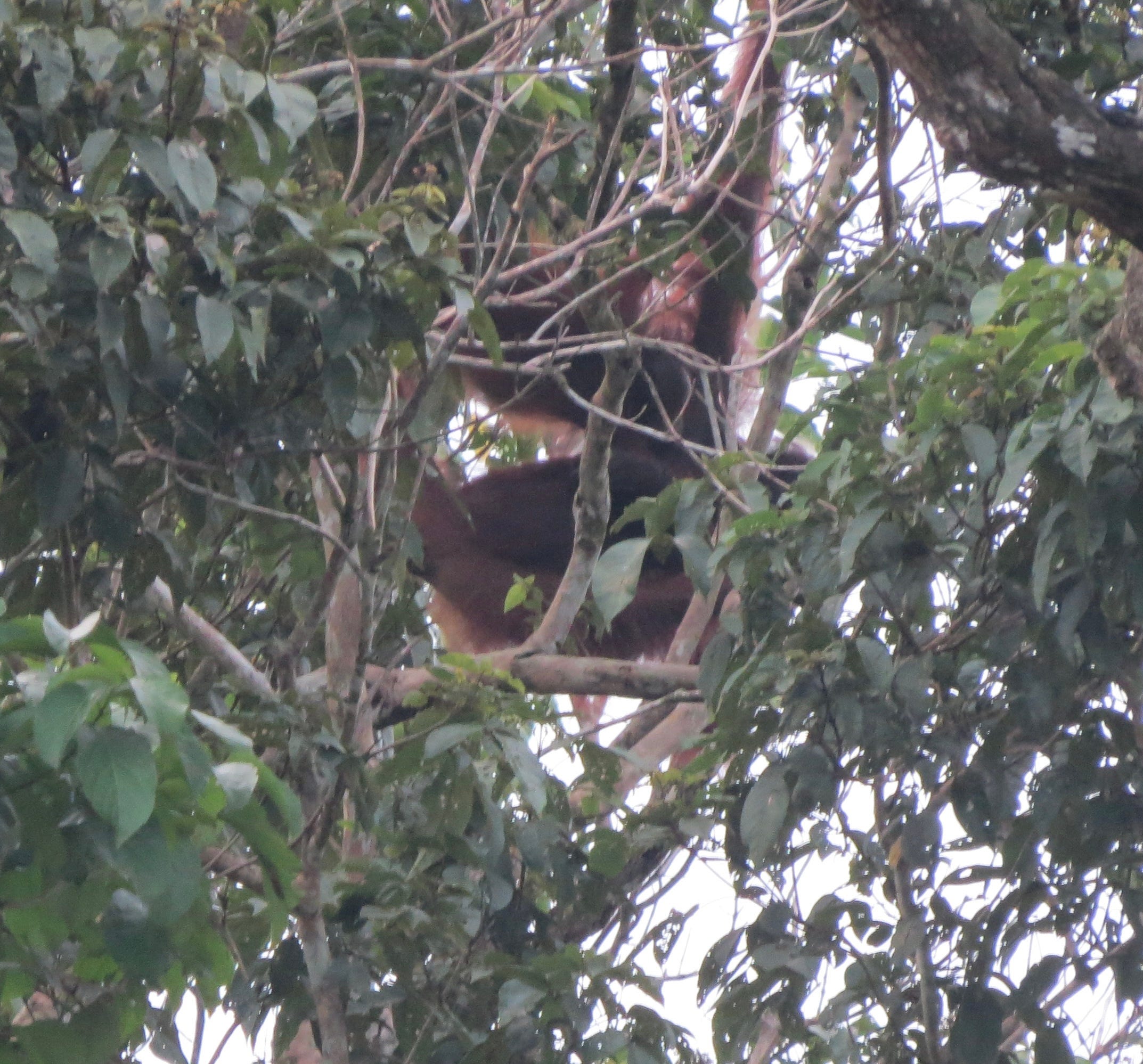
As well as spotting the ‘Top 5’ - orangutans, pygmy elephants, proboscis monkeys, crocodiles and oriental pied hornbills, I saw a myriad of other birds and animal, at least fifteen other types of birds, four different types of reptiles, six types of apes, and at least seven other types of animals… and more than once. That, from chugging slowly down the river in our sixteen-person fibreglass open boat focusing on the river-bank jungle .Wow!
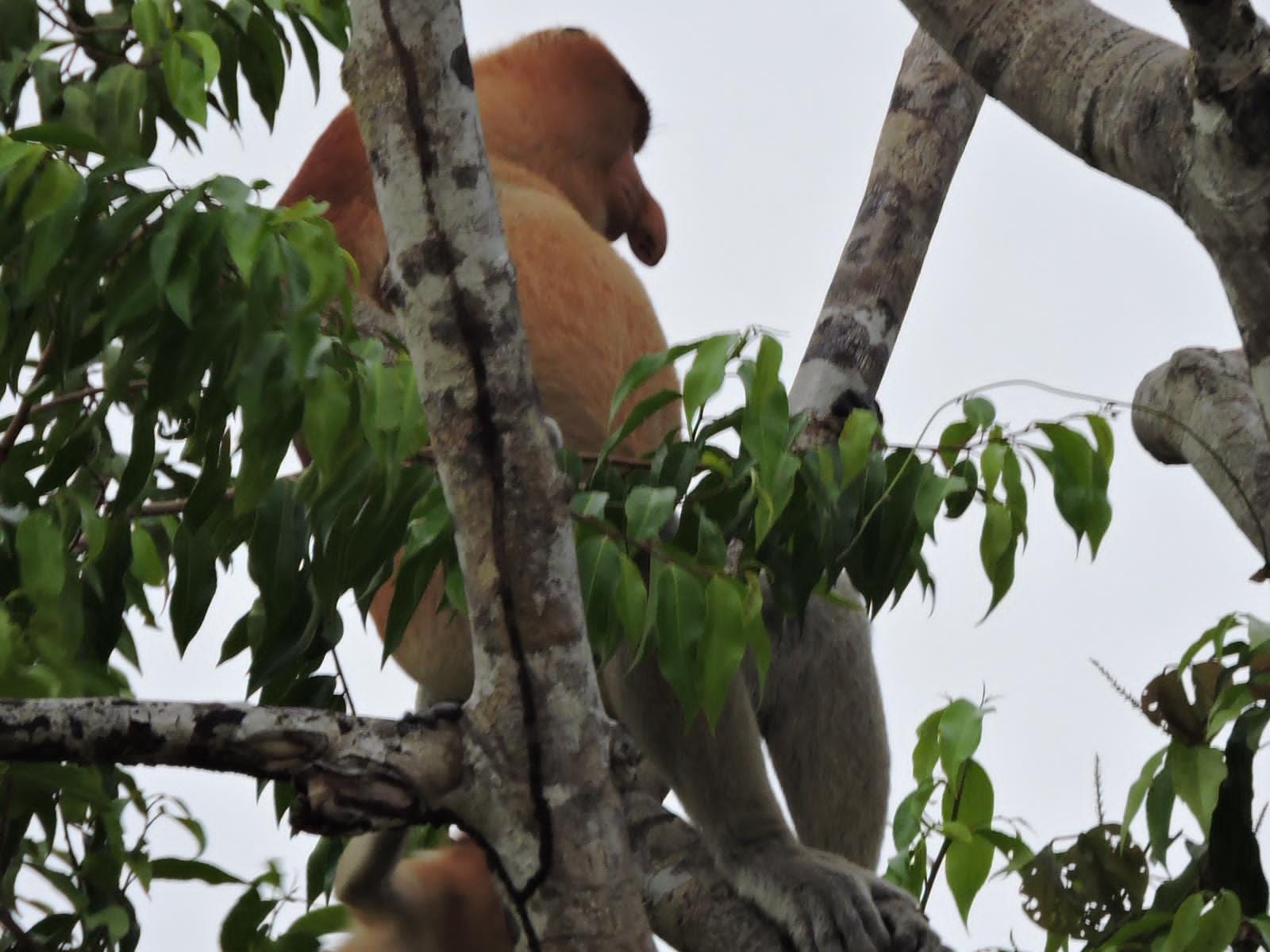
That is more wild-life than I saw when I lived on the island for three years.
I was certainly closeted back then. And a car was a ‘bridge too far’ for a lowly teacher in a mining camp. I lament I wasn’t a bird watcher. But I was working, and although we played hard, we worked hard too.
Camping in our jungle lodge on the river now, I experience the afternoon tropical downpours that I remember so well. (Then, usually erupting at exactly the moment I was walking home from work.) The torrential soaking rain, the lightening flashing all around, thunder roaring finally silencing the cacophony of the cicada chorus, while still with the heat and humidity of the Equator. I still revel in it.
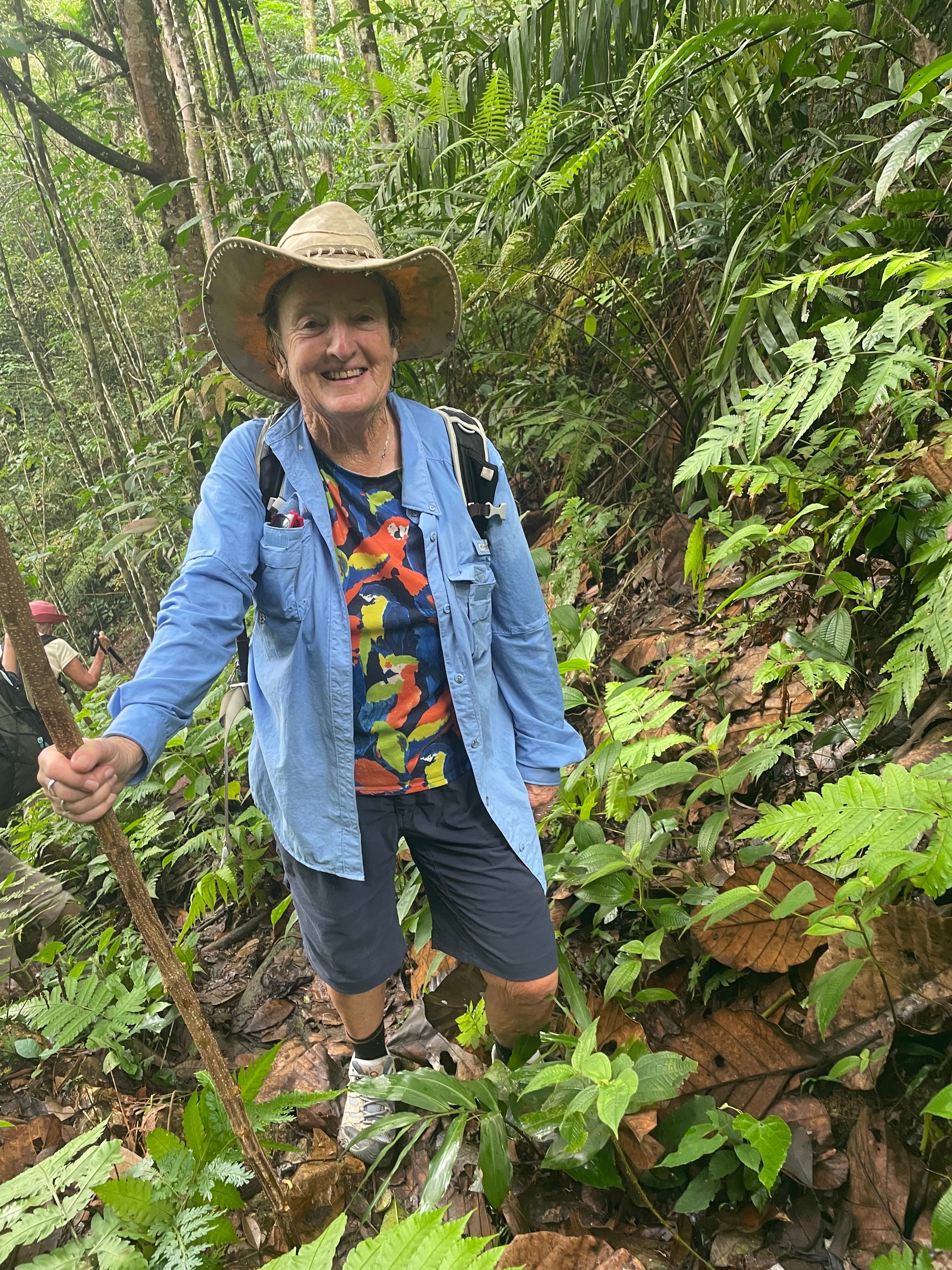
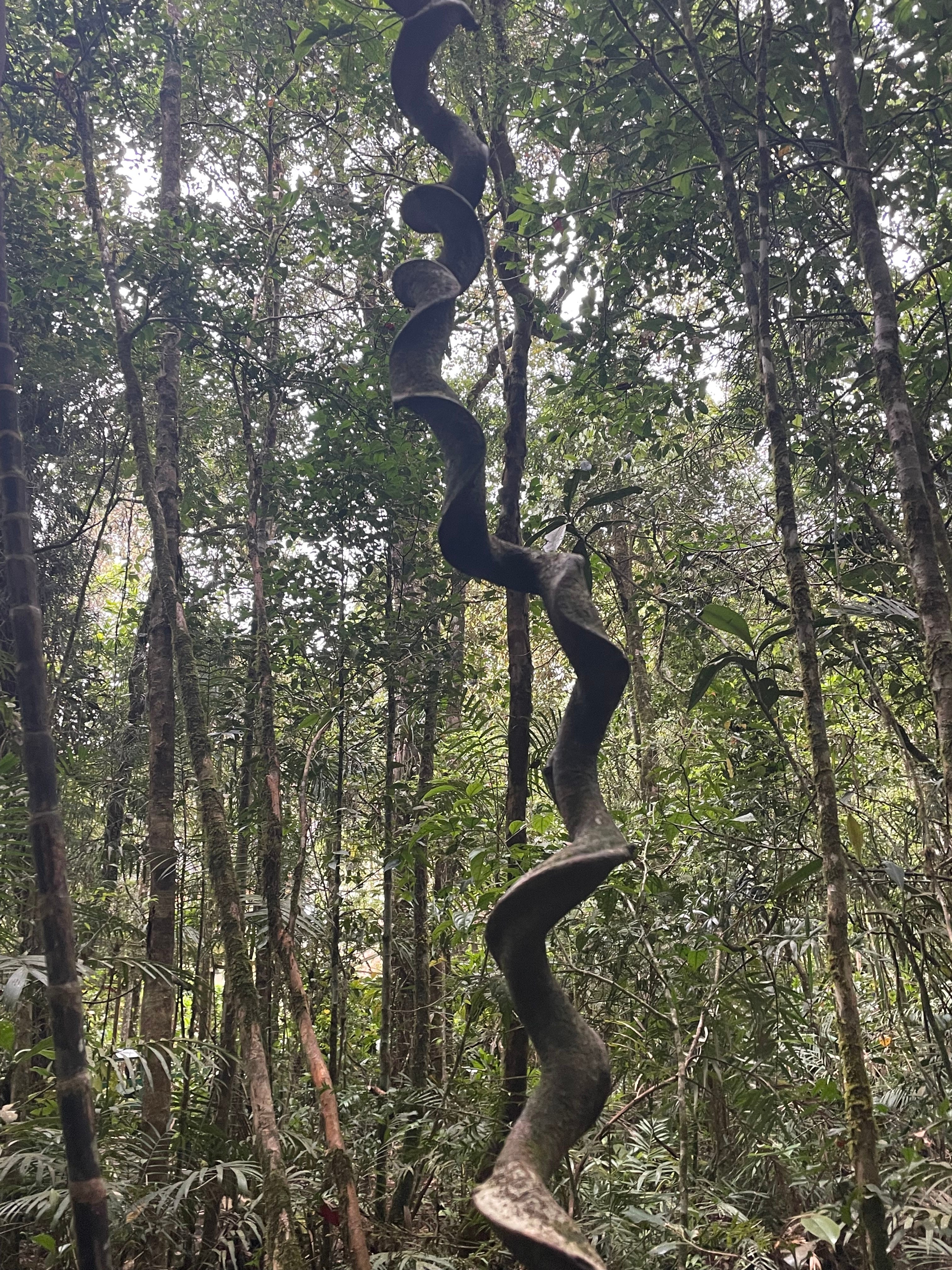
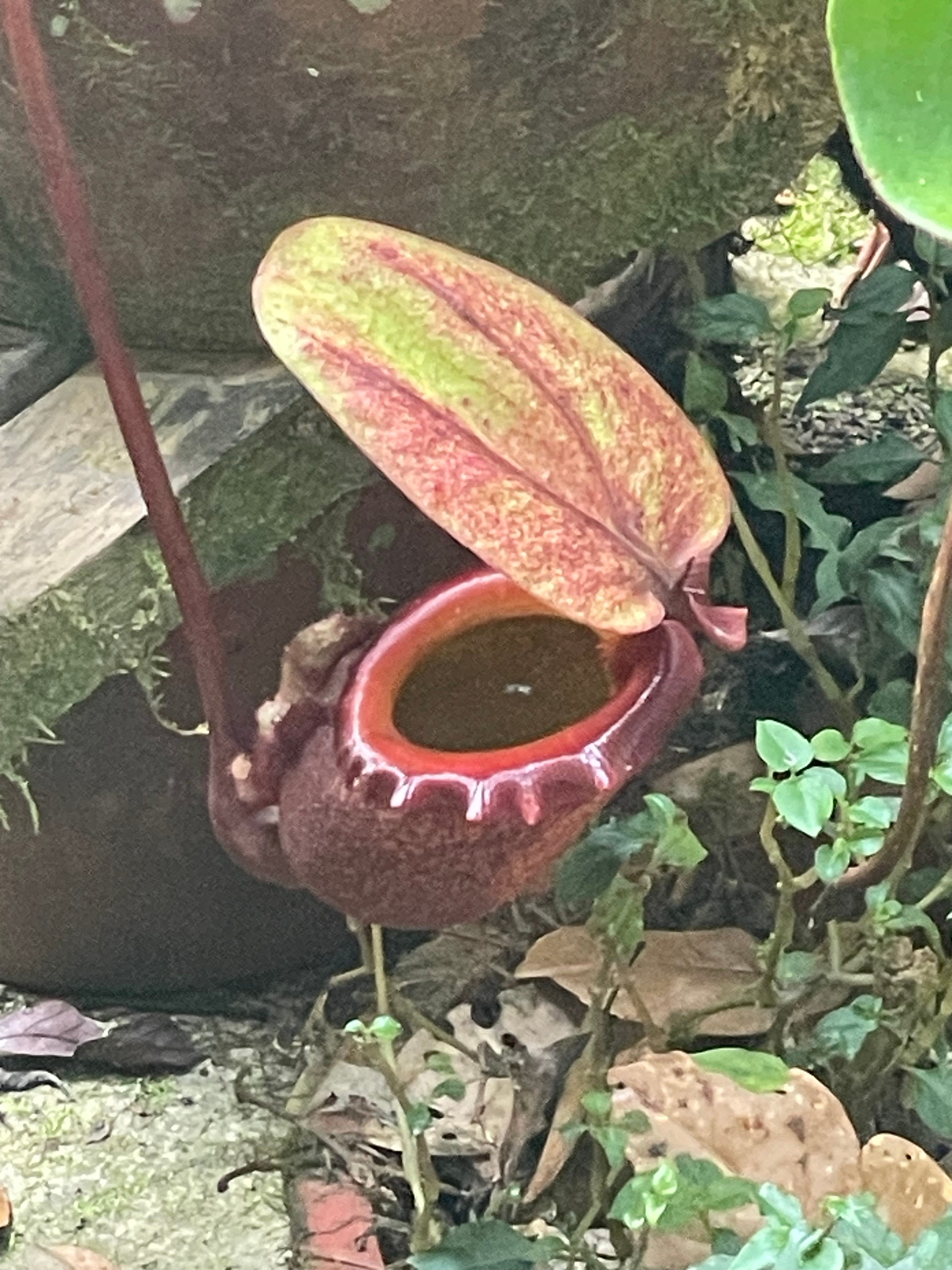
The jungle is a constant. I walk through the jungle around the base of towering Mt. Kinabalu in Sabah, and around the kampung of the ‘orang asli’/indigenous people near Kuala Lumpur. The Bangkiri and Meranti trees still tower above to form the canopy. Ironwood is less prevalent here as it’s so prized for timber for housing and products. Vines, vines and more vines, orchids, pitcher plants and even the evil-smelling Rafflesia, not flowering at the moment. All so familiar to me. I love the jungle walking. Rough and slippery and muddy still. The sweat pouring off you, running in rivulets down your back and face, sun-screen leaching into your eyes, but luckily no leeches today. The equator – 33 degrees and humid. No wonder after the jungle walk, I jump on the back of a local’s motor bike (Also, so familiar to me.) for a lift back to the bus.
And the language – my Bahasa Indonesian greetings, politeness, food and travel surface in the brain as I interact with the locals in their Bahasa Malaysian, but thirty years is long ago. And I realise that Kalimantan would have changed in the last thirty years too. Once, not even a television. Now everyone clutches a mobile phone. I suspect Kalimantan will still be overall less developed and poorer than Sabah but the Indonesians are building their new capital city for Indonesia near where I once lived in the Borneo jungle. It will be interesting what changes that makes to the island.
Both Sabah and Kalimantan have been ravaged by logging, and clearing for palm oil plantations. New roads are being constructed through the jungles. The isolation and mystic is no more. But, the adventure is still possible with swathes of jungle still standing, with the wild-life still surviving, and the ‘Dayaks’ still keen to retain their culture. I feel well-satisfied with my return to the island of Borneo.
Reference:
Patch Adventures… out of Aus. A women’s trip. ‘16 days Borneo adventure’.
Wild People Andro Linklater,Abacus Travel. 1990
Well if you haven't yet earned your title of 'queen of adventure' yet Lou, you certainly have now. This, as well as queen of adventure writing. This is another stunning piece. I totally agree that you learn so much when you live in a country rather than being a tourist. Thank you for taking me to that part of the world with your beautiful images and descriptions.
Lou, you have captured the jungle so well. I could nearly smell it. Glad you avoided the leeches this time. I can remember vividly peeling off a blood soaked sock after a trek in search of an elusive corpse flower!